






























CropLife India Maps $1 Trillion Agri Economy Vision

Union Minister, policymakers, academia and industry chart roadmap for crop protection’s role in achieving Viksit Bharat 2047 vision” during the National Conference 2025
New Delhi, Delhi, India (NewsVoir)
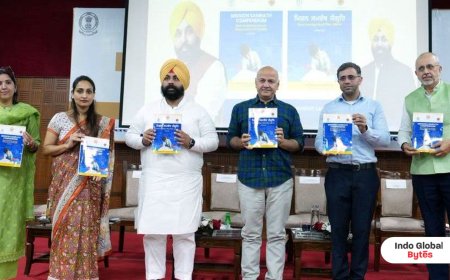
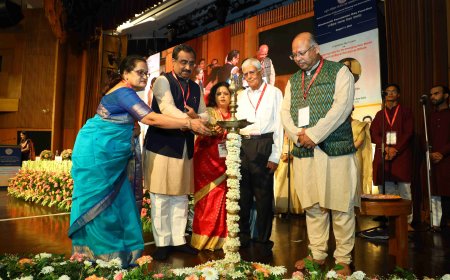
CropLife India; the association of leading domestic and multinational R&D driven crop science companies; on its 45th AGM organized a National Conference. The conference witnessed the presence of Shri Shivraj Singh Chouhan, Hon’ble Union Minister of Agriculture & Farmers Welfare, Government of India; senior Government officials, experts, academia and industry leaders.
Multinational R&D driven crop science companies; on its 45th AGM organized a National Conference. The conference witnessed the presence of Shri Shivraj Singh Chouhan, Hon’ble Union Minister of Agriculture & Farmers Welfare, Government of India; senior Government officials, experts, academia and industry leaders.
National Conference 2025 opened with the Inaugural Session, setting the vision for Viksit Bharat 2047. This was followed by “The Regulatory Challenges and Opportunities in the Indian Context”, where regulators, policymakers and industry leaders decode India’s framework; Panel Discussion – “Empowering Farmers, Navigating Compliances & Global Standards: A State-wise View of the Agri-input (Crop Protection & Bio-stimulants) Industry & Export”, highlighting state-level complexities and how policy, compliance and innovation can empower farmers and boost exports and the CEO’s Panel – “Pesticides in the Spotlight: Villain, Hero or Scapegoat?”, featuring a candid debate on the future of crop protection.
During his inaugural address Shri Shivraj Singh Chouhan, Hon’ble Union Minister of Agriculture & Farmers Welfare, Government of India, shared that, “For me, the farmer is the soul of our nation and serving them is a gift from God. From the days of food scarcity and dependence on imports, India has today become self-reliant and an emerging exporter—with agriculture growing by 10% in recent months. Yet, with our population set to reach 170 crore by 2050, ensuring food and nutritional security is our foremost duty. Nearly half our people depend on farming, most with less than two acres of land and our policies must reflect this reality. To achieve a $5 trillion economy, we must increase productivity per hectare, embrace new technologies and translate research into solutions for farmers’ real problems. Agriculture is not just an industry—it is a national responsibility. Together, the Government, scientists and industry must ensure prosperity for farmers, sustainability for our land and nourishment for humanity."
Dr. Trilochan Mohapatra, Chairperson, PPV&FRA, Ministry of Agriculture & Farmers’ Welfare, Government of India said, "India’s agrochemical sector has been key to our food security and growth—from 65 million tons of food grains to nearly 350 million today. As the industry grows at 9–11% CAGR, we must balance productivity with sustainability through responsible use, strong regulation, and science-led innovation, ensuring the protection of farmers, consumers and the environment."
Dr. P. K. Singh, Agriculture Commissioner, Government of India highlighted "India’s agri-input ecosystem is rapidly evolving, and digitalization will be key to its future—from AI-enabled regulatory processes to harmonized Centre–State laws. Responsible pesticide use and promotion of bio-pesticides are vital; farmers should spray only when necessary. By aligning regulation, innovation and good practices, we can empower farmers, safeguard food security and strengthen India’s global competitiveness."
Dr. Vandana Tripathy, Network Coordinator (AINP) & Scheme In-charge (MPRNL), ICAR highlighted, "There is a critical need for harmonized pesticide residue data generation across diverse locations. Only by collecting comprehensive and sensitive health-related data — including pregnancy outcomes — from multiple regions can we ensure reliability and build science-based systems that safeguard public health.”
Dr. Poonam Jasrotia, ADG (PP), ICAR shared, "Protecting our traditional fairs and agricultural practices with clear safeguards, while fostering global collaboration, is vital. Partnerships with countries like the US and Japan offer immense opportunities, even as we address critical gaps in regions such as Libya.”
Dr. Subhash Chand, Secretary CIB&RC said, "The key challenge in the import-for-export framework is balancing Ease of Doing Business with regulatory safeguards. While flexibility for genuine exporters is important, registration certificates and confirmed international orders are essential to prevent misuse. Where companies provide credible documentation, we are open to supportive, positive solutions."
Shri T. M. Tripathi, Joint Director, Department of Agriculture, Uttar Pradesh said, "There is no blanket ban on crop protection products—only crop-specific restrictions like in Basmati, where farmer training is crucial. The bi