























CRRI Calls for Scientific Road Redesign to Cut Fatalities

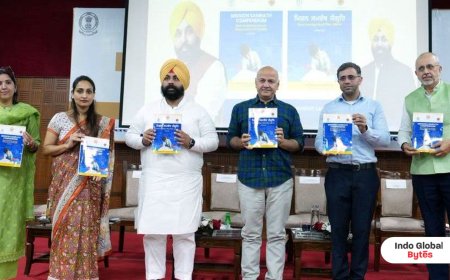
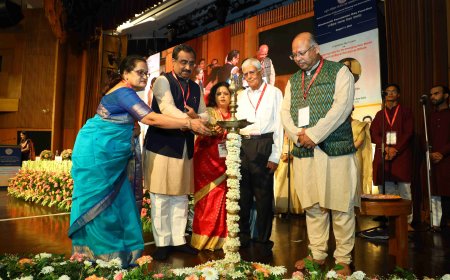
Experts, NGOs and industry leaders deliberate on Safe System Approach at Delhi meet organised by Steelbird Helmets New Delhi, February 24, 2026: Steelbird Helmets, in association with TRAX - Road Safety NGO and Central Road Research Institute (CSIR-CRRI), organised “Mission: Save Lives On Roads, India — An Integrated Road Safety Meet” in Delhi on Monday, bringing together leading road safety experts, trauma specialists, policymakers, regulators and public health authorities to deliberate on actionable solutions to curb road accidents and fatalities. The conference was inaugurated with the ceremonial lighting of the lamp by Rajeev Kapur, Managing Director – Steelbird Hi-Tech India Pvt. Ltd., in the presence of distinguished dignitaries from government, academia and civil society. Placing scientific road engineering and infrastructure-led interventions at the core of discussions, experts from CSIR-CRRI led the deliberations with a strong emphasis on the Safe System Approach. In his insightful address, Shree Mohan Rao, Chief Scientist, CSIR-CRRI, said that capacity building of road-owning agencies is crucial. Integrating driver behaviour with scientific road design can create infrastructure that anticipates risks and delivers measurable improvements in safety outcomes. He added: “A significant number of road accidents are caused by faulty driving and driver error, often triggered by visual, manual and cognitive distractions. Continuous driving without adequate rest leads to driver fatigue, which directly affects eye-blinking rates, reaction time and decision-making ability. Drivers tend to drive the road as they perceive it, not necessarily as it is designed — therefore, road design must match drivers’ expectations. Lane changing requires heightened caution, and speed transitions should always be gradual to avoid sudden conflicts. Consistent road alignment and predictable design elements are critical to reducing human error and enhancing overall road safety.” Further strengthening the infrastructure and planning perspective, Dr Mukti Advani, Principal Scientist, Transportation Planning & Environment Division, Central Road Research Institute, emphasised the need to rebalance mobility priorities. Dr Mukti Advani said: “The belief that speed and safety are mutually exclusive is a myth—we can achieve both by prioritizing people over cars. Instead of endlessly adding lanes, flyovers, and space for vehicles—which only shifts congestion, pollution, and crashes elsewhere—we must stop this futile cycle and reallocate fixed road space to good footpaths, pedestrian priority, cycle tracks, and non-motorized users. Providing safe, attractive walking and cycling infrastructure not only protects vulnerable road users and reduces conflicts by 20–30%, but actually boosts overall road capacity and encourages sustainable mobility. Our infrastructure budget overwhelmingly favors cars and speed, sidelining pedestrians, cyclists, and safety—if we lack funds for genuine safety measures, we should not build at all. True balance demands rethinking priorities: design for people first, learn from our own failed experiments like 102 unproductive flyovers, and shift from car-centric planning to inclusive, sustainable systems that truly save lives.” The event featured two high-impact technical sessions — “Creating Safer Road Infrastructure through Junction Improvement and Road Space Management” and “Enabling Safer and Sustainable Mobility: Towards Inclusive, People-Centric Transport Systems” — both centered around scientific planning, safer infrastructure design and inclusive mobility frameworks. From the civil society perspective, Shree Anurag Kulshrestha, President, TRAX (Road Safety NGO), underlined the importance of scientific identification and treatment of black spots along with intelligent junction redesign. He said: "The Safe System Approach recognizes that humans are fallible and will make mistakes due to our natural inclination toward glamour and adventure, yet death and serious injuries on roads are unacceptable; instead of punishing road users in a blame-centric traditional system that reacts slowly to black spots and relies on heavy enforcement, we must shift to designing forgiving roads and junctions that absorb errors—through safe roads and roadsides with proper 180-degree visibility free from over-vegetation and obstructions, safe speeds via channelization and compact designs that prevent zigzag behavior and excessive lanes, safe road users including pedestrians, cyclists, and vendors accommodated thoughtfully, reduced conflict points with proper merging per IRC standards, designated call-and-go spaces, and geometric features that guide natural behavior even for uneducated drivers—so the entire system, from infrastructure to vendor management, proactively protects vulnerable human bodies, forgives mistakes, and saves countless lives at our nation's heartbeats: the junctions." Adding a district-level implementation per