



















O.P. Jindal Global University Celebrates World Heritage Day 2026 with an Exhibition on the Sonipat’s Historic Bazaars

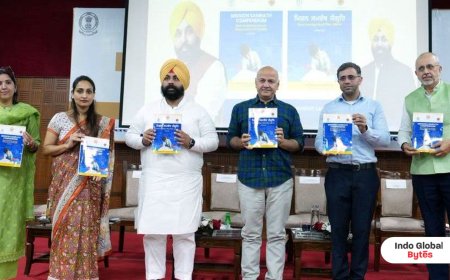
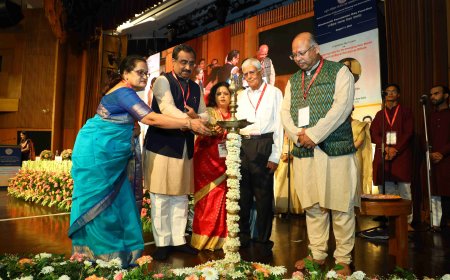
Sonipat, Haryana | April 21, 2026 The Historic Bazaars of Sonipat exhibition was inaugurated on 17th April 2026 at O.P. Jindal Global University as part of its World Heritage Day 2026 celebrations. The exhibition which was on display between April 17 and April 19, 2026, invited the public to explore the cultural, architectural, and social richness of Sonipat’s historic marketplaces. Titled “Documentation of Historic Bazaars of Sonipat,” the project approaches these marketplaces not merely as commercial spaces but as living repositories of the city’s cultural identity, economic evolution, and collective memory. Through a combination of archival research, field documentation, and stakeholder engagement, the study captures the dynamic character of these urban environments. The inauguration ceremony was graced by distinguished dignitaries including Dr. Veerappa Moily (Author and Former Union Cabinet Minister for Law & Justice), and Hon’ble Mr. Justice Madan Lokur (Former Judge, Supreme Court of India), whose presence underscored the significance of the initiative. The Founding Vice Chancellor of O.P. Jindal Global University, Prof. (Dr.) C. Raj Kumar applauded the collaborative initiative between the Jindal Institute of Haryana Studies (JIHS) and Jindal School of Design and Architecture (JSDA). “The project focuses on preserving and showcasing the layered heritage of Sonipat’s traditional bazaars, which continue to serve as vibrant centres of everyday life. This unique exhibition aesthetically presents the outcomes of an extensive year-long documentation project undertaken by students of the JSDA under the guidance of Prof. Sukanya Sharma,” he said. “While our work continues to engage deeply with the pressing economic challenges facing the state, we are equally committed to understanding and preserving the cultural and historical fabric that shapes it,” said Prof. (Dr.) Mrinalini Jha (Director, JIHS). “Our institute seeks to illuminate the rich cultural heritage surrounding our university, and to familiarise our students with the remarkable traditions of skill and craftsmanship — हुनर — that are so distinctive to this region. By bridging economic inquiry with cultural awareness, we aim to cultivate a more holistic and grounded perspective among our students.” A key highlight of the project is the creation of an immersive Digital Twin — a detailed 3D reconstruction of the historic bazaar. Designed to go beyond static representation, this digital model recreates the bustling atmosphere of a traditional Indian marketplace. It allows visitors to virtually navigate the primary commercial spine of Sonipat, tracing its route from Murthal Adda Chowk through the dense historic core to Bada Bazaar and Ganj Bazaar. The research methodology operates across multiple scales to ensure a comprehensive understanding of the bazaar. At the macro level, the study situates Sonipat along the historic Grand Trunk Road, examining how this strategic location influenced the evolution of its marketplaces. At the meso level, 360-degree immersive tours and physical surveys were used to map street layouts, shop configurations, and architectural facades. At the micro level, activity mapping and in-depth interviews with shopkeepers and vendors provide insights into daily rhythms, footfall patterns, and generational continuity. The documentation also highlights key built heritage within the bazaar, including religious and historical landmarks such as Shri Maa Chitane Wali Mata Mandir, Bada Jain Mandir, Kos Minar, Deeni Mosque, and Khwaja Khizr Tomb, alongside historic havelis like those of Chajjumal and Pibbumal. These structures collectively reflect the pluralistic and layered history of Sonipat, offering a glimpse into its architectural and cultural diversity. Beyond architecture, the exhibition vividly captures the sensory and cultural life of the bazaar. Traditional occupations such as woodworking and jewellery-making are documented alongside culinary practices, including the preparation of seasonal delicacies like gajar ka halwa and festive sweets like ghewar. Cultural traditions, such as the vibrant Dussehra processions passing through the bazaar streets, further reinforce its role as a living cultural corridor. At the same time, the project critically engages with contemporary challenges facing the bazaar. The area experiences frequent congestion due to high footfall, vehicular movement, and shop encroachments, leading to bottlenecks and safety concerns. Issues related to waste accumulation, poor drainage, and sanitation gaps are also evident, contributing to an unhealthy environment. These observations highlight the urgent need for sensitive, context-driven urban interventions that balance preservation with modernization. Architecturally, the bazaar retains a predominantly low-rise and dense urban fabric, with most structures limited to ground-plus-one levels. While newer developments are visible along the main roads, the inner la