



















The Egypt Energy Show (EGYPES) Launches in Cairo, Uniting Regional Leaders to Address Pressing Energy Security Priorities

• H.E. Abdel Fattah El Sisi, President of the Arab Republic of Egypt, opened the event by calling on global leaders across government and industry to act decisively amid "one of the most severe energy crises in modern history."
• H.E. Nikos Christodoulides, President of the Republic of Cyprus, highlighted the impacts of the ongoing crisis on global energy priorities, stating "energy security is no longer merely an economic concern - it is fundamentally a political imperative."
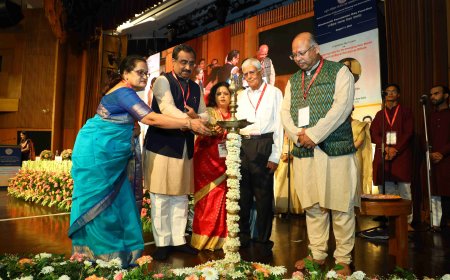
• Alongside contributions from global heads of state, the event's Opening Ceremony featured Ditte Juul Jørgensen, Director General of Energy, European Commission; H.E. Jasem Mohamed AlBudaiwi, Secretary General of the Gulf Cooperation Council; and H.E. Eng. Karim Badawi, Minister of Petroleum and Mineral Resources, Arab Republic of Egypt.
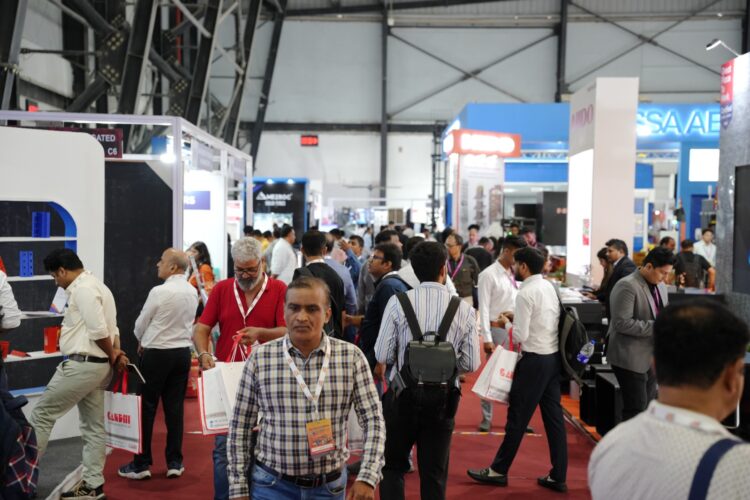
• Over three days, the event will welcome more than 50,000 participants, 300 speakers, 2,200 delegates and 500 exhibitors, affirming its global scale and strategic importance for cross-border collaboration and innovation.
CAIRO, March 30, 2026 /PRNewswire/ -- The Egypt Energy Show 2026 launched today with a stirring message from His Excellency Abdel Fattah El Sisi, President of the Arab Republic of Egypt, who called on global leaders across government and industry to unite in the face of unprecedented international volatility:
The Egypt Energy Show 2026
"The International Energy Agency has indicated that this may be one of the most severe energy crises in modern history - indeed, possibly one of the most significant crises the modern world has faced. This is not a single shock, but a double shock: a supply shock and a price shock. We are facing a significant reduction in supply - estimated at around 20 to 25 percent. Given the grave consequences of continued conflict […] it is our collective responsibility to work toward ending such crises, as cooperation is the key to overcoming the current challenges facing the energy sector."
Across the event's Opening Ceremony, this message was echoed by the heads of state, global energy ministers and senior policymakers gathered in Cairo to drive immediate progress on shared energy security priorities. His Excellency Nikos Christodoulides, President of the Republic of Cyprus, further emphasised the critical need for deeper regional cooperation to navigate current instability, with Eastern Mediterranean nations playing a growing role in supporting stable supply chains and reliable interconnections:
"A regional crisis continues to threaten stability and reshape the global energy landscape. It has become abundantly clear that energy security is no longer merely an economic concern - it is fundamentally a political imperative, intrinsically linked to regional and international stability. In this context, we must strengthen our readiness to respond to disruptions in energy flows and adapt effectively to the rapidly evolving global reality."
The widespread impacts of ongoing geopolitical conflicts and supply disruptions remained a central focus for the high-level policymakers in attendance, such as Ditte Juul Jørgensen, Director General of Energy, European Commission, who affirmed the EU's commitment to addressing urgent accessibility needs and long-term decarbonisation goals through cross-border collaboration and investment:
"No one can fully capture the scale of uncertainty and instability that the Middle East has witnessed. This situation has underscored the urgent need to transition to cleaner energy and to build sustainable domestic energy systems that ensure access to clean and reliable energy. For Europe, Egypt is a valued partner in this effort, and we must seize this opportunity not only to address current challenges but also to build a shared future defined by stability, resilience, sustainability, transparency, and integrity."
The Opening Ceremony also provided an open and inclusive platform for His Excellency Jasem Mohamed AlBudaiwi, Secretary General of the Gulf Cooperation Council (GCC), to demand accountability for the ongoing crisis and reassert the Gulf region's critical role in driving progress and supporting stability throughout the entire energy landscape:
"Against the backdrop of Iranian aggression toward GCC states and the consequent threat to energy security in this vital region, this conference is taking place at a pivotal moment. The GCC countries play a critical role in stabilising international markets through prudent production policies and effective coordination that maintain a delicate balance between supply and demand and shield the global economy from severe volatility."
His Excellency Eng. Karim Badawi, Minister of Petroleum and Mineral Resources, Arab Republic of Egypt, also took the stage to underline the country's firm commitment to pragmatic policymaking, strategic investment, and sustained cross-border collaboration, all of which have defined its rise as a fast-growing regional energy hub